



Innovation Building Program
Addressing soundproofing in a multi-family project
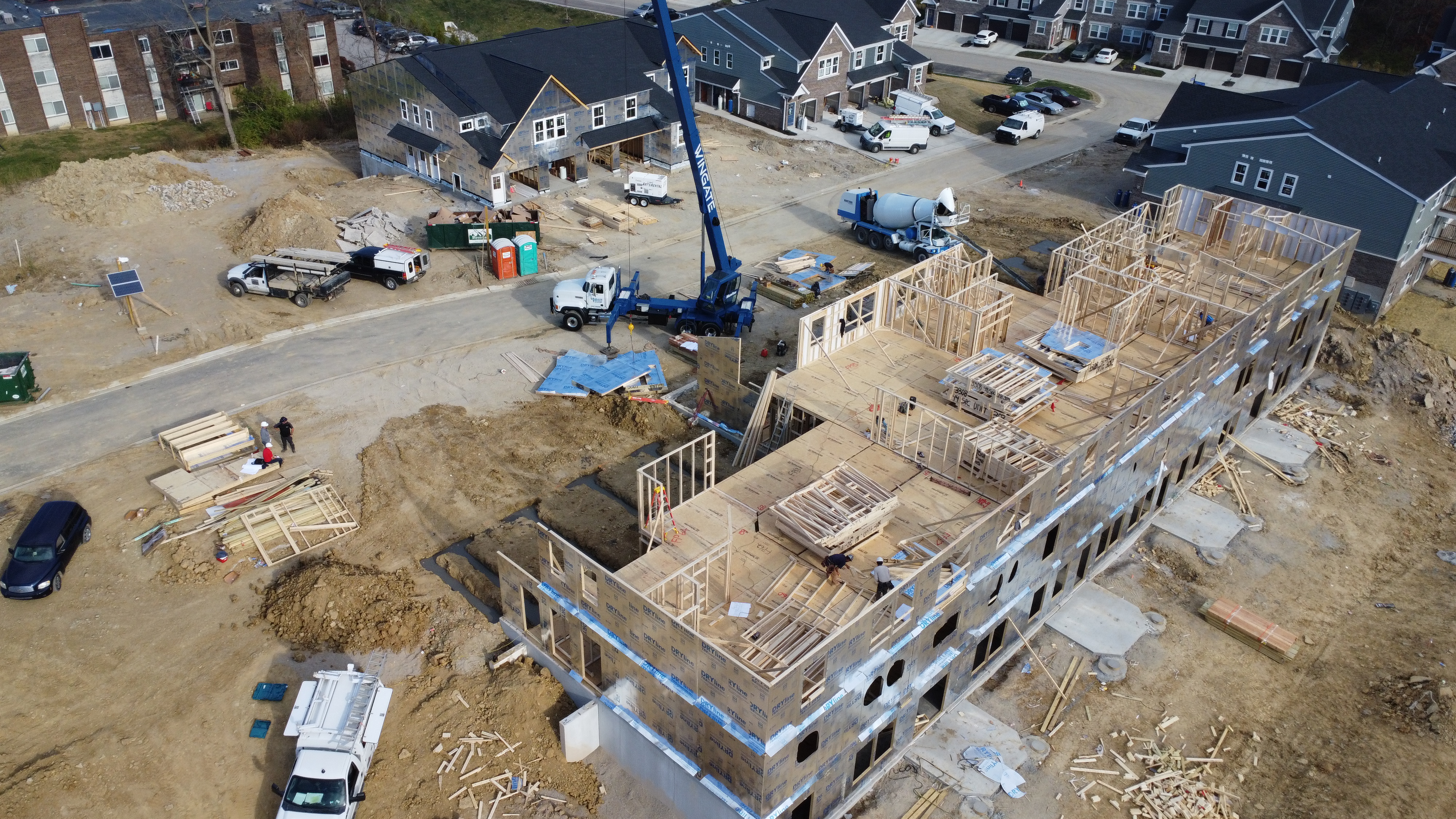
Cincinnati Build 1
The Innovation Building Program (IBP), launched by MiTek in 2021, seeks to enhance the building industry by exploring new off-site construction methods to address housing demands. By comparing innovative construction approaches with traditional methods, partners evaluate data demonstrating efficiency and cost-effectiveness.
In 2022, MiTek partnered with Fischer Homes and Carter Lumber on a 14-unit condominium building in the Cincinnati, Ohio, area that Fischer had been constructing using traditional methods for over 15 years. This IBP project was the first to involve a multi-family, attached building type, which introduced new challenges for the team to address.
In multi-family buildings, acoustic performance is essential. Fischer Homes has a unique method to address this in their traditional floor system, which has been effective and refined through many versions over the years. The traditional assembly involved adding a layer of foam board and a layer of regular-weight concrete over a wood subfloor—an approach that is impractical for off-site construction. Additionally, acoustical tests indicated that the legacy assembly was not as effective as expected in reducing sound transfer.
Fast Facts
*Foundation thru MEP Rough-In
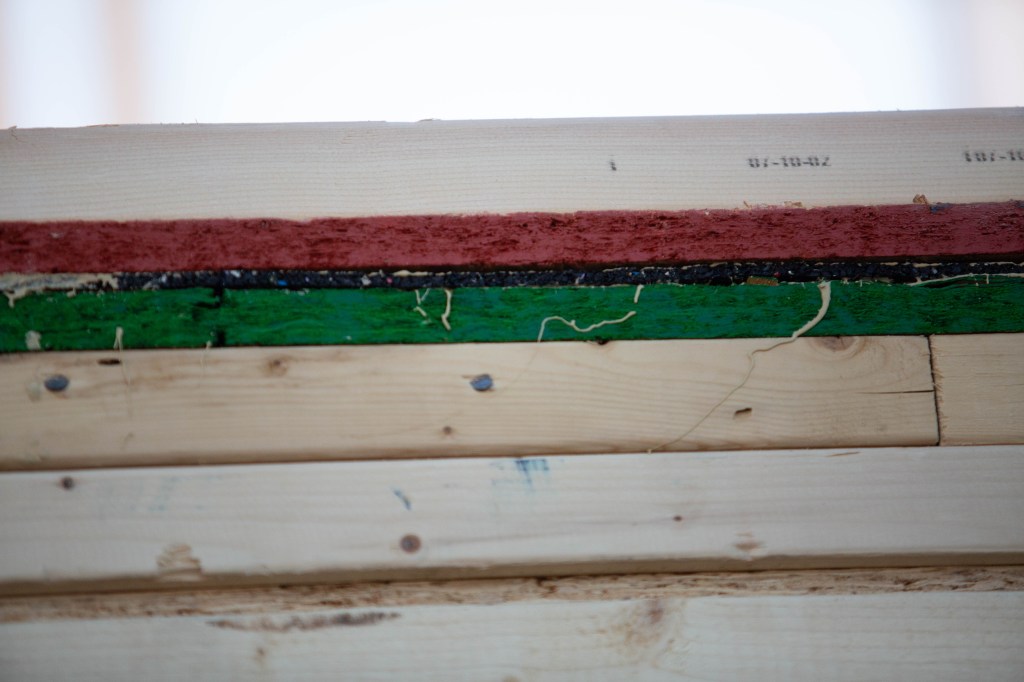
To find a way to enable more off-site methods, a different approach was developed for the innovation build. It used an acoustic sound mat placed between layers of oriented strand board in floor sections made off-site. Since the method was new to everyone involved, a mock-up assembly was created, which helped identify what adjustments were necessary before starting production.
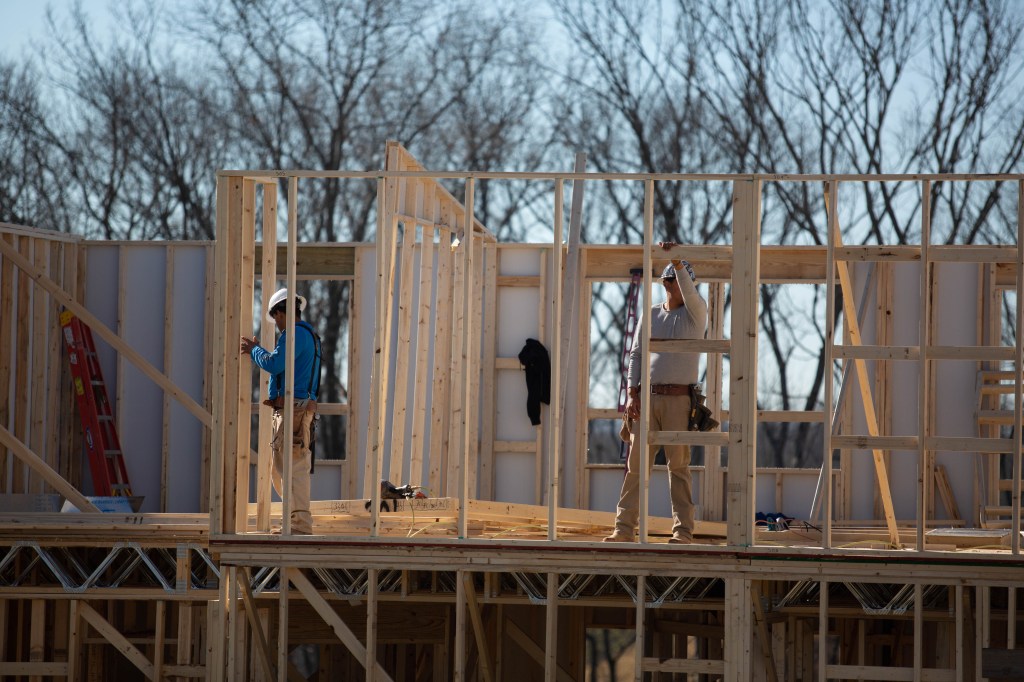
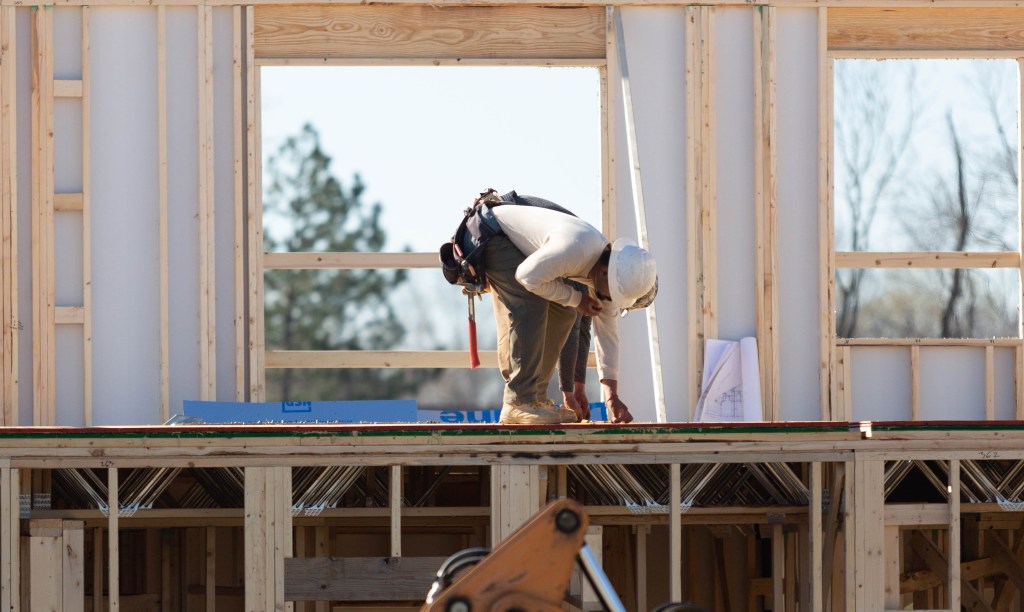
The floor system was delivered to the construction site in pre-assembled sections, called floor cassettes, which included the floor trusses, subfloor, and, in this case, the sound mat sandwich. The inclusion of the acoustic mat posed challenges for the team to address during the design, manufacturing, and construction phases, requiring a balance between off-site and on-site assembly while maintaining acoustic performance at the joints. The solution for this project involved allowing strips of the mat to be peeled back so that cassette-to-cassette connections could be made on-site, followed by filling in the gaps above the mat.
Cincinnati Build 1
The goal was to find an off-site assembly option for the floors.
Steve McFall
Senior Director – SFS Design, MiTek
“This build, being a multi-unit building, led to some additional angles to evaluate, with the most significant being the shift in floor assembly from a wet system using a concrete topping to the dry system using the sound mat sandwich,” said Steve McFall, SFS Design Senior Director. “The goal was to find an off-site assembly option for the floors that would serve as an alternative to the on-site concrete system used in the control build.”
Eliminating the poured concrete layer allowed shifting the floor system depth from 12-inch wood web trusses to MiTek’s 14-inch Posi-Strut® metal web trusses without needing to alter the architectural layout. This would have been necessary if the overall floor system depth had been improved. The additional truss depth provides access for mechanical, electrical, and plumbing installations. The Posi-Strut also reduces sharp edges that could snag flex duct and electrical wires during installation. It was expected that, over time, using less concrete on projects would also boost sustainability by lowering the carbon footprint.
The acoustic engineer also suggested a different method for soundproofing the walls between units.
“The acoustic engineer recommended removing the soundboard that Fischer typically uses in the build,” said Brett Jones, Sr. Project Manager – Installed Solutions. “The soundboard would normally be installed between unit separation walls and has traditionally been used to reduce sound transfer between units. The acoustic performance is believed to be improved by removing the soundboard. The shift in products to help with acoustic performance also required adjustments to meet fire separation requirements, which involved adding small strips of mineral wool along the wall.”
While the Cincinnati IBP focused on addressing the unique challenges of off-site construction for multi-unit dwellings, it also provided valuable lessons that could be applied to all future projects still in development. Each IBP project offers an opportunity to gather more data on the efficiencies of off-site building and show the value to our builder partners.
It’s a huge data set – the largest that MiTek has had on a single innovation build to date.
Brett Jones
Sr. Project Manager – Installed Solutions, MiTek
Cincinnati Build 1
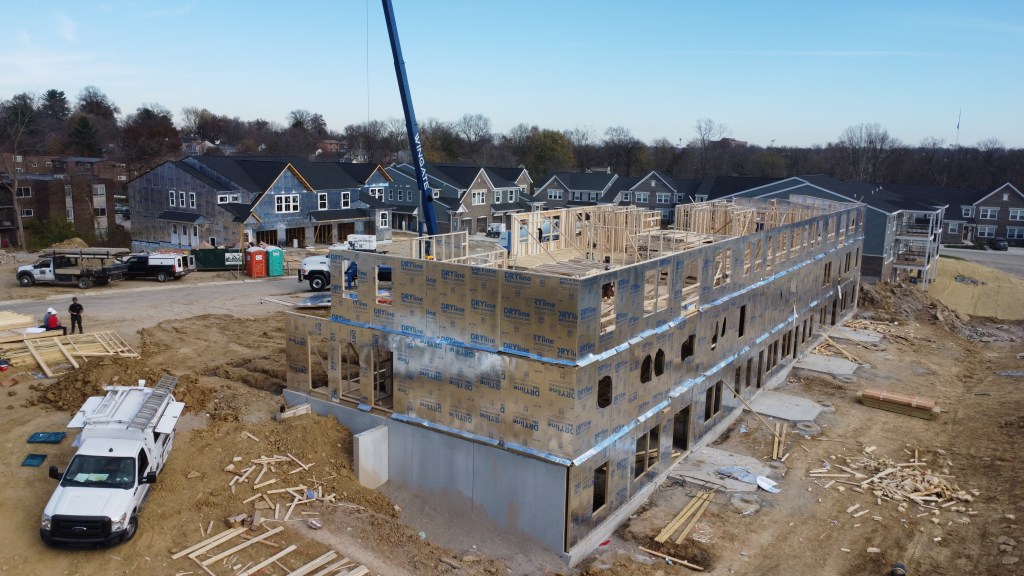
Jones said one of the early takeaways from this project is its size and scope: a 14-unit condo building.
“It’s a huge data set – the largest that MiTek has had on a single innovation build to date,” Jones said. “When we look at future builds, we might change that scope and try to bring it down in size so we can really fine-tune.”
By the end of the build, Jones said Fischer Homes was impressed with how data was being gathered and analyzed. As a result, they developed their own templates for data collection that could be used and adapted for future builds.
“One of the things we continue to learn in these innovation builds is that there are aspects of the build that builders may want to focus on, perhaps outside the program. That’s a great sign that they are embracing what data means to them, innovating, and involving their people in that process, so I’m excited about that.”
Key Takeaways
Cycle Time
The use of Posi in floor trusses led to overall 35% reduced on-site labor hours, compared to traditional wood web
The use of Posi also decreased cycle time by 2 weeks
The cycle time savings above apply to this build only. Actual results will vary with each project. Learn more about typical whole home componentization savings results.
