
Innovation Building Program
Comparing traditional approaches with off-site methods
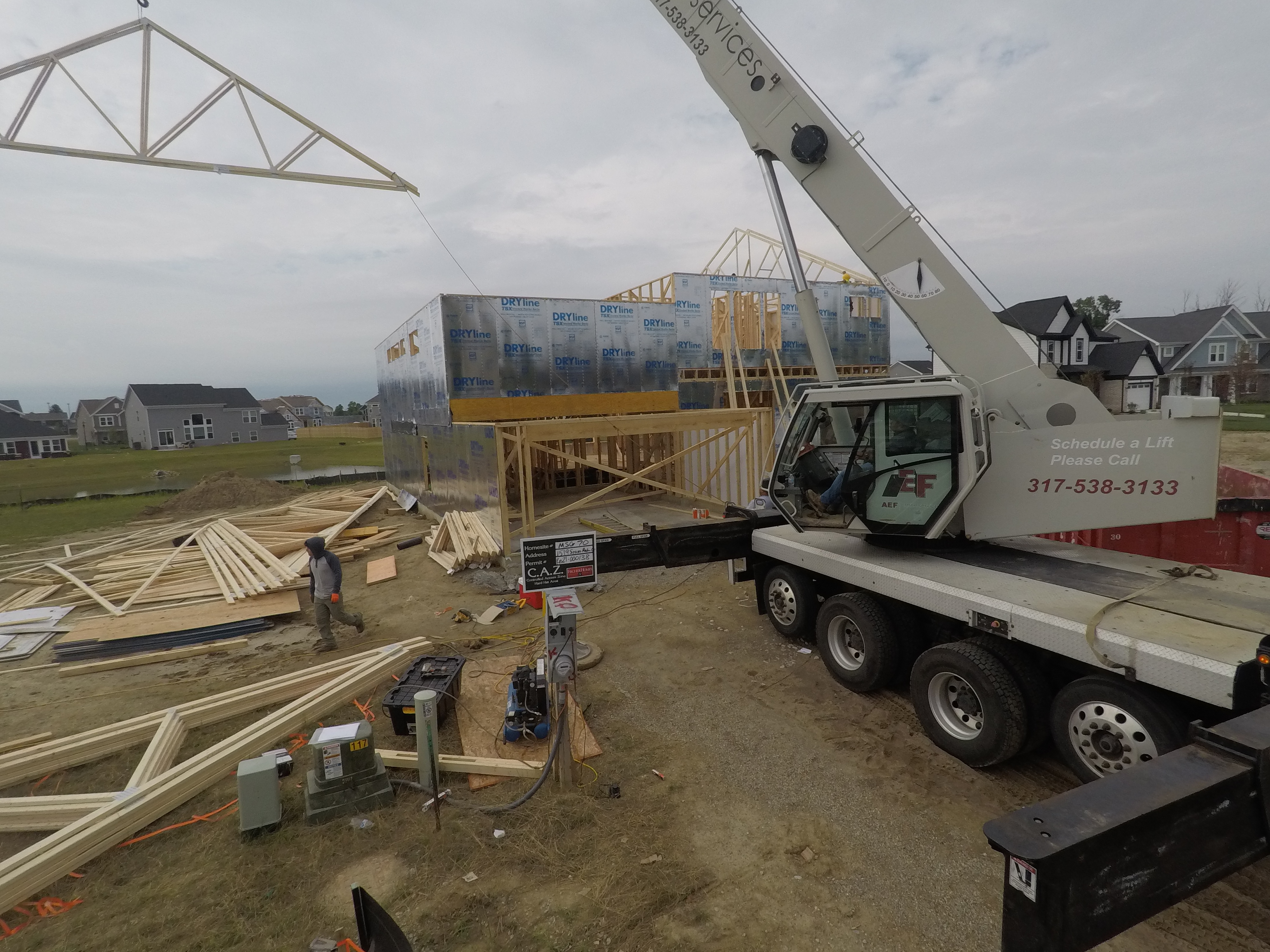
Indianapolis Build 1
In 2021, MiTek launched an exciting initiative collaborating with key residential construction partners to improve homebuilding methods and address the housing needs of growing populations.
In general, the Innovation Building Program is a process that uses a science-based approach to improve how the industry builds single-family homes. MiTek collaborated with various industry partners to innovate and transform construction. Instead of one company trying to change the industry alone, MiTek brought experts together to find a better way.
Taking a closer look, a key part of the Innovation Building Program is that each build is more than just a single project. Instead, a partnership is created to collaborate, focusing on the Design, Make, Build (DMB) approach to construction, which includes using components like floor trusses, wall panels, and roof trusses.
The idea for this project was sparked in 2019, when MiTek started exploring why newer methods, like panelization and off-site manufacturing, weren’t more commonly used in the construction industry. Labor shortages and material supply issues appeared to be factors that could lead to a shift away from traditional methods.
Jamie Moore, SVP of Strategic Business Transformation, emphasized that it all comes down to trust.
“What we learned at that time was it really took a strong relationship with a framer, builder, and component manufacturer,” Moore said. “In those instances, they could really adopt off-site building and get the advantages of speed, savings, reduced waste, and improved quality.”
Fast Facts
It really took a strong relationship with a framer, builder, and component manufacturer
Jamie Moore
SVP of Strategic Business Transformation, MiTek
In January 2020, Mark Thom, MiTek Chairman & CEO, challenged company leaders to consider how to facilitate change in the market. This challenge led to the development of a new approach to promote change rather than relying on isolated demonstration efforts. The outcome was the creation of a unique program that focuses on building two houses simultaneously, with one constructed using traditional methods and the other employing transformational approaches.
The next step involved recruiting a builder, framer, and component manufacturer (CM) willing to partner and carry out multiple builds to foster a collaborative focus on innovation. This process would enable MiTek to explore opportunities in both materials/components and building methods, and develop a total cost model that identifies where value can be gained through transformational build approaches.
Through this ongoing process, MiTek aims to identify the obstacles that hinder the adoption of widely accepted off-site building techniques in certain markets, understand the challenges faced by key project influencers, and develop new solutions to address their pain points.
One hurdle MiTek would need to overcome was simply the risk involved with change.
“The desire for innovation is high among many builders in the industry,” Steve McFall, SFS Design, Senior Director, said. “However, the mechanisms needed to evaluate and adopt change are often a challenge.”
By minimizing change risk and uniting industry leaders for collaborative innovation, both MiTek and the industry benefit. This process will lead to the emergence of new technology, products, methods, and solutions that advance the industry. Additionally, it will foster new business models for key partners aiming to deliver value to the marketplace through production-based builders.
The desire for innovation is high among many builders in the industry. However, the mechanisms needed to evaluate and adopt change are often a challenge.
Steve McFall
Senior Director – SFS Design, MiTek
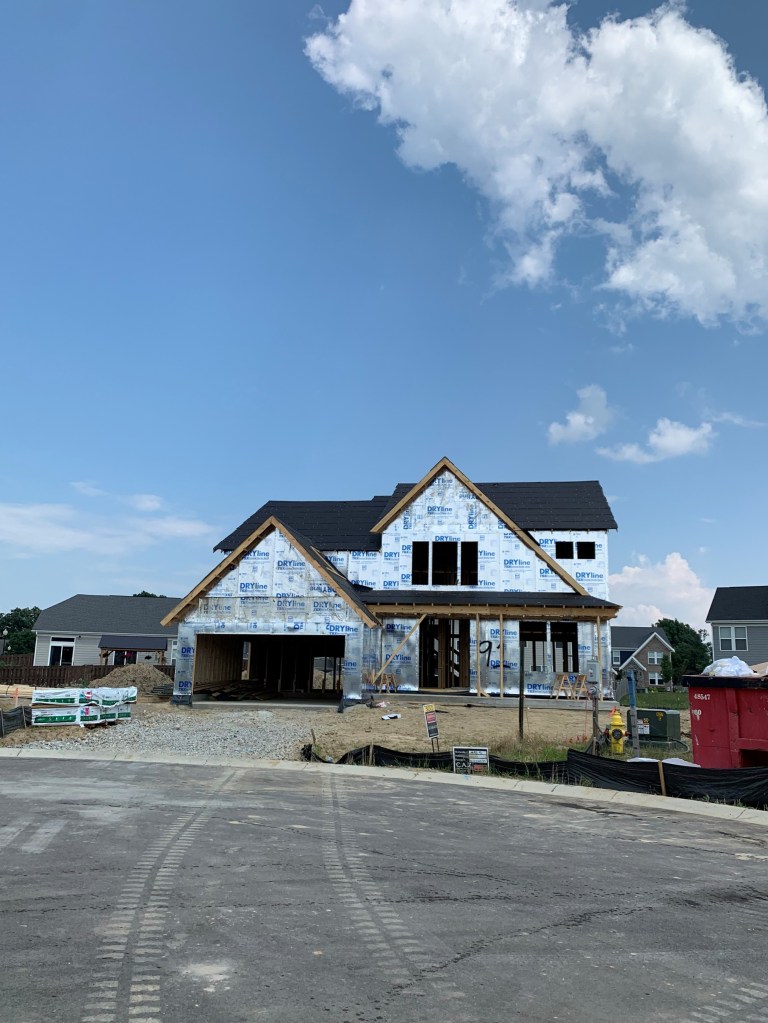
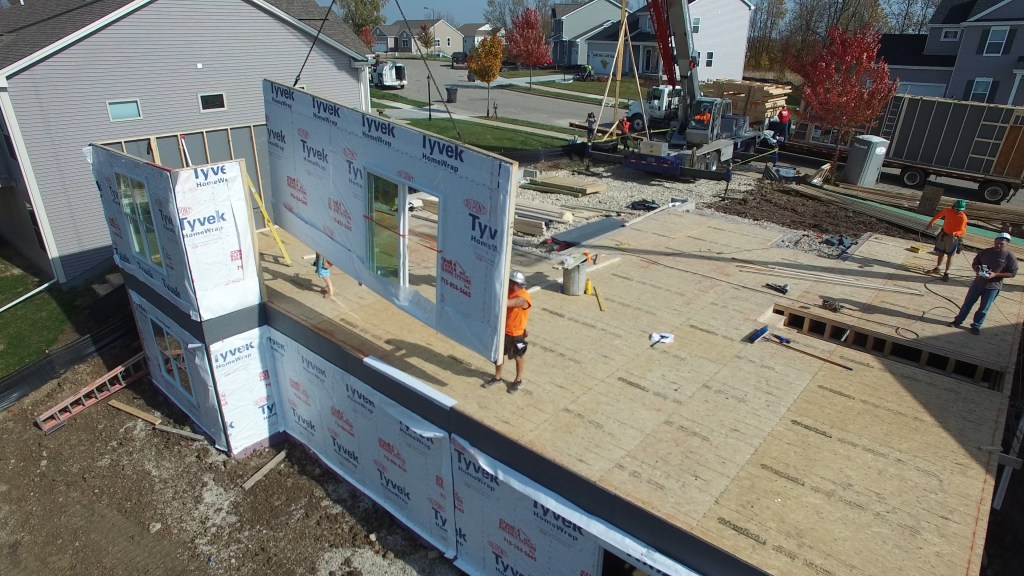
For the first Innovation Build project, MiTek partnered with Fischer Homes, Builders FirstSource, and AEF Construction to build single-family homes in Greenfield, Indiana, a suburb of Indianapolis. The project involved constructing two homes: one using a traditional approach and the other employing components and off-site methods. This side-by-side comparison helped the team develop a “total cost model” for homebuilding.
“Fischer has been a valuable partner with MiTek for several years, utilizing our software technology in their operations,” Gregg Renner, former VP of Global Regional Marketing, said. “We chose Indianapolis because we already work with component manufacturers and framers experienced in panelization, which made it easier to build partnerships for this project.”
McFall mentioned that although the DMB approach to construction isn’t new to the industry, Fischer hadn’t widely adopted it yet. Fischer was interested in partnering with MiTek on this project because the company wanted firsthand experience to decide on the right builder system to use.
Construction of the traditionally built home picked up the week of July 5, 2021, with framing of the transformational home beginning on July 7. Rachel Seward, SVP of Corporate Communications and Corporate Social Responsibility, and Lisa Tyree, SVP and Chief Human Resources Officer, arrived in the early afternoon on July 7 after the first floor was nearly fully framed.
The two walked around the subdivision to see a few other homes in different stages of construction, and when they returned to the transformational home less than an hour later, the second floor was nearly finished.
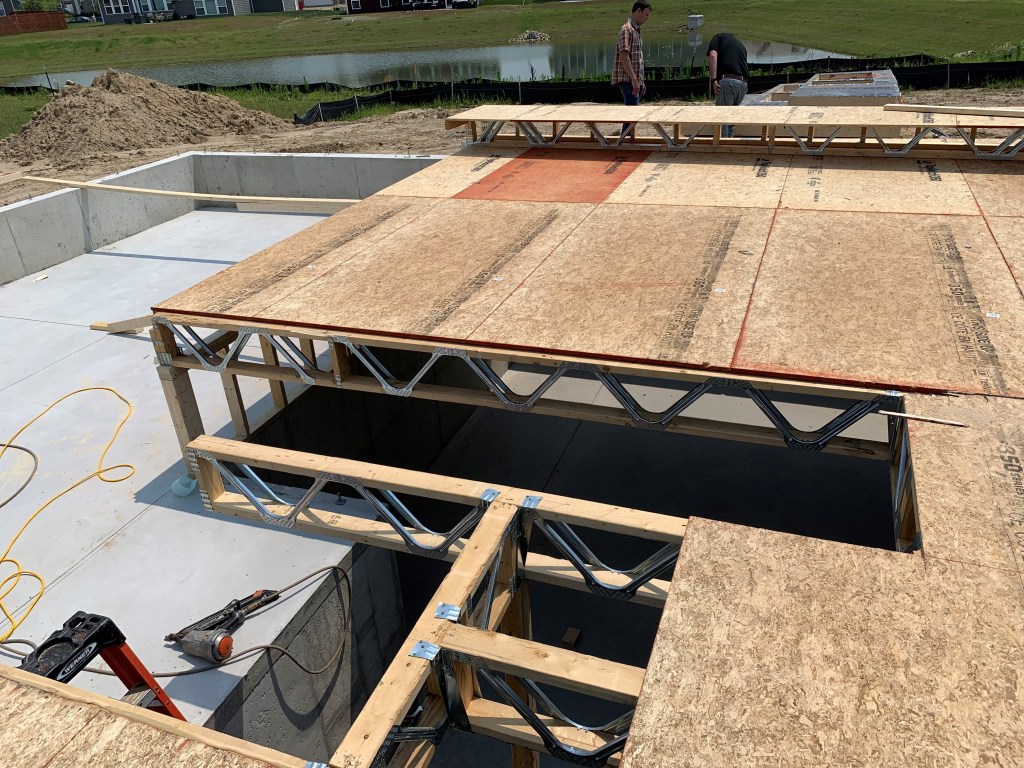
“It blew us away to see such fast progress in such a tangible way,” Seward said. “We learned a lot about the benefits of open-web floor cassettes and how much time you save by not having to drill holes to run your mechanical, electrical, and plumbing (MEP) systems through the floor.”
“The team is identifying every advantage and even the smallest savings to determine the total value of building the MiTek way,” Seward said. “The dollars might seem minor, but when you add them all up for one house and multiply it across hundreds or thousands of new homes, the numbers really add up!”
Indianapolis Build 1
The dollars might seem minor, but when you add them all up for one house and multiply it across hundreds or thousands of new homes, the numbers really add up!
Rachel Seward
SVP of Corporate Communication, MiTek
Next, the team created a cost model, held a retrospective meeting with all partners, and then started planning for the second build pair. McFall was confident that understanding the tasks each program partner was responsible for—while also aiming to reduce the overall build cycle time, would lead to a prioritized list of impactful innovation opportunities for each build pair to pursue.
“We’re not expecting this project to provide all the answers,” Moore said. “We’re expecting it to give us the small nuggets, the little stepping stones of change we need to move forward with the second build and each one after that.”
Key Takeaways
Cycle Time
Wall panels were observed to save 51% of time vs. stick-framed wall assembly.
Floor cassettes were 38% faster to install vs. stick-framed floor regions.
Plumbing and electrical trades experienced roughly 1 day of rough-in time savings each.
The cycle time savings above apply to this build only. Actual results will vary with each project. Learn more about typical whole home componentization savings results.
