


Floor Trusses

Resource Materials for Open Web

Explore the unique advantages of floor truss systems over traditional floors through our collection of frequently asked questions, downloadable articles, and webinar content.

That’s a valid concern. It’s true that wider truss spacing could lead to material deflecting more between trusses. To prevent issues like tile cracking or sagging, it’s crucial to explore options such as upgrading, reinforcing the subfloor, or selecting more rigid materials that can better handle these wider spacings. It’s essential for designers to consider the constructability of their products and evaluate all possible options versus simply just looking at reducing material quantities.

This is a common question. Floor performance is a key design consideration. Since each project is unique, and each truss is often used in a unique location in the project, it is important to work with your truss manufacturer to design the truss system for your desired outcome. To prevent a “bouncy” feeling, trusses are (1) typically designed to a maximum length-to-depth ratio (a good rule of thumb is under 20), (2) engineered to perform with code specified loading and performance conditions, and (3) often incorporate strongbacks to reduce differential deflection and vibration. Strongbacks are reinforcement members that run perpendicular to the trusses, helping to distribute weight and dampen vibration across the entire floor system. You can find more information about strongbacks here.

Absolutely. Every floor truss is custom-engineered to meet the specific load requirements determined by the project’s structural engineer, satisfying all building codes. A standard truss at 19.2” on-center spacing can easily handle most residential loads (e.g., 55 psf). For higher loads or specific point loads, trusses can be designed as 2-ply and span significant distances with ease. For best project results, it is wise to reach out to a MiTek truss manufacturer, or to MiTek’s Design Engagement team, to confirm what truss design is optimal for your project. 

Fire safety is a critical concern for any floor system. In 2012, UL released the Full-Scale Floor System Field and Laboratory Fire Experiments report, which is linked here.

The report emphasizes “the importance of protecting [exposed floor areas in] all types of flooring systems, including dimensional lumber.” When drywall is installed, collapse times exceed 20 minutes for all floor systems, demonstrating that a drywall ceiling is critical for fire safety across all floor framing materials.

The statement from the summary on page 296 is key:
“The overriding safety message is that a well-ventilated basement fire that has involved the floor system is inherently dangerous to operate on top of regardless of the construction method or members involved. The longest time to collapse of an unprotected floor system during this series of experiments was 12:45 after ignition. Since the fire department does not typically know when the fire started there is no guaranteed safe operational timeframe to be operating on top of a residential basement fire.”

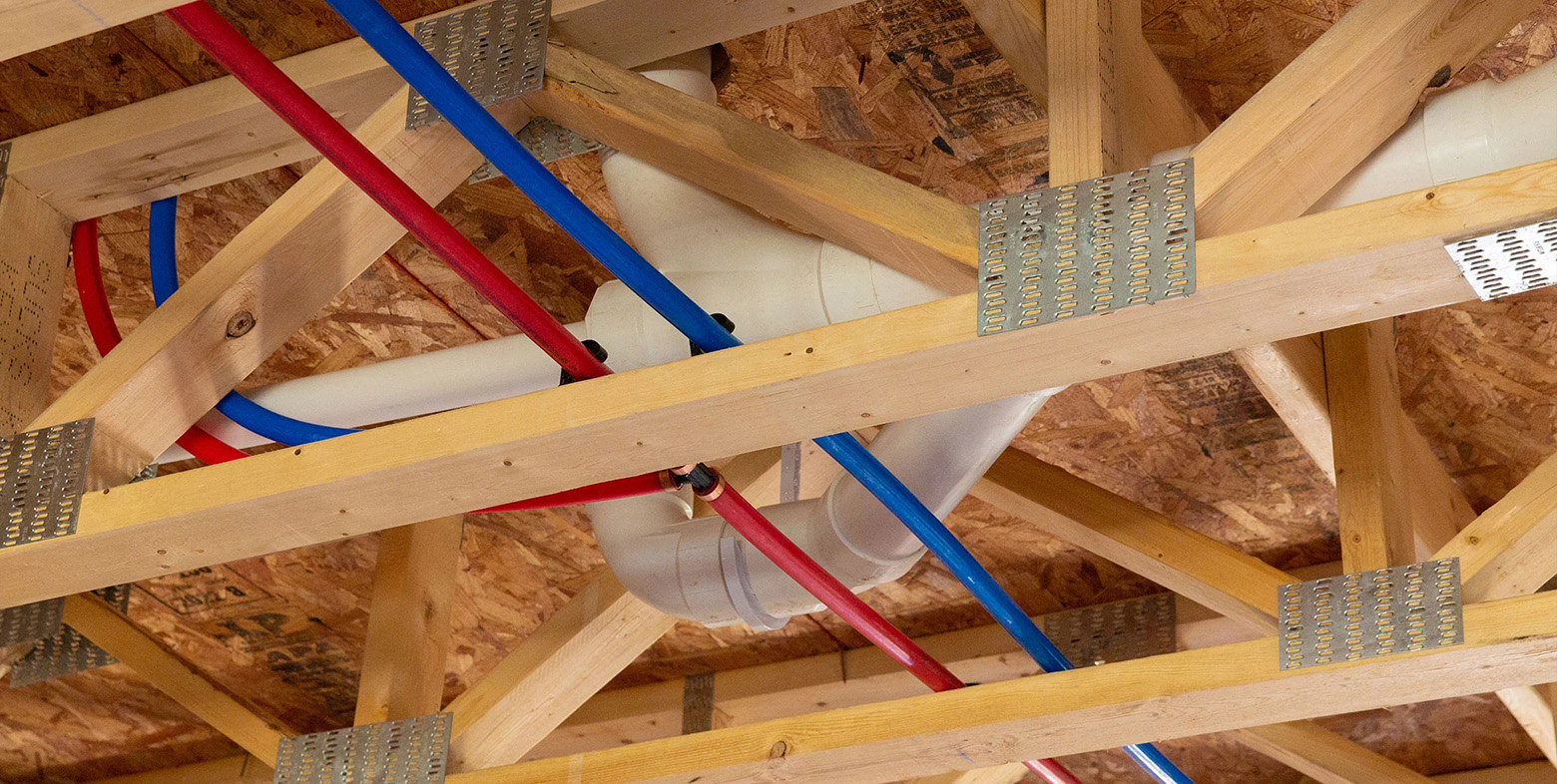
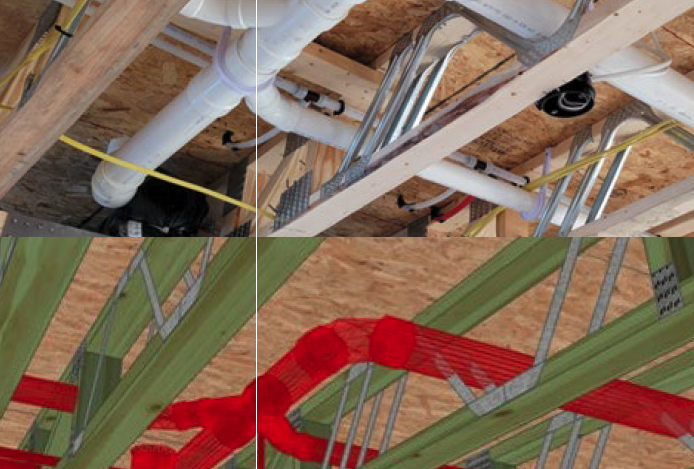
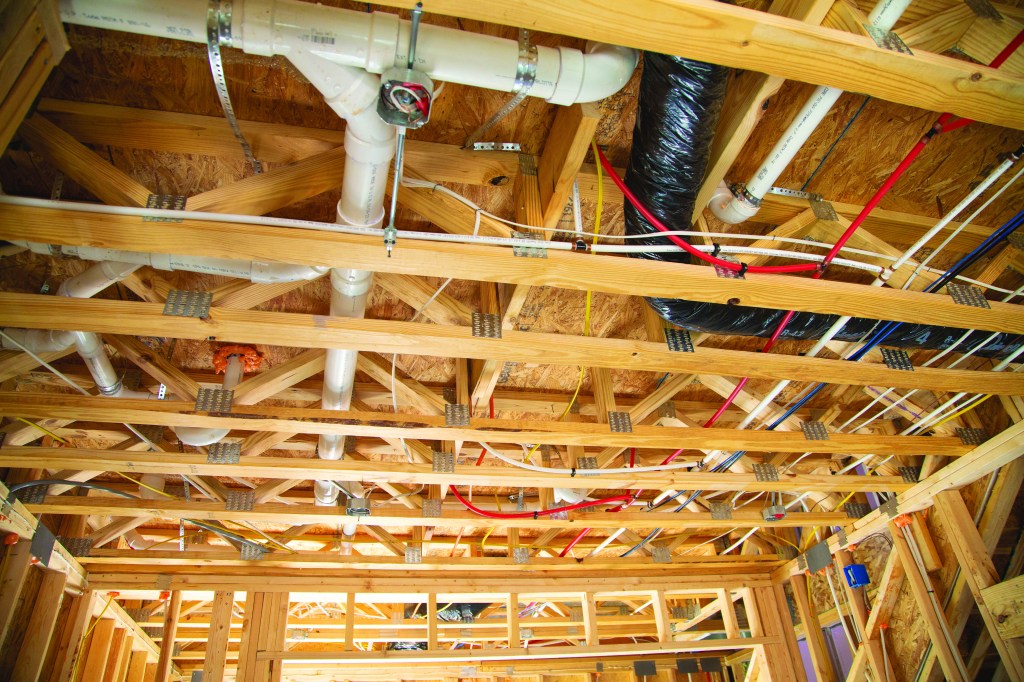
This is actually one of the greatest advantages of open web trusses. The open design provides a clear, accessible chase for mechanical, electrical, and plumbing (MEP) runs. This eliminates time-consuming drilling that is required with i-joists or sawn lumber. Leveraging the open webs also eliminates the necessity for the carpenters or drywallers to return to the jobsite to frame in a soffit MEP installation. By coordinating with the mechanical team during the design phase, chases can be sized perfectly, saving significant time, labor, waste, and rework on the job site.

No, floor trusses are not inherently louder; in fact, they are often used to create high-quality, squeak-free, and quiet construction, especially when properly engineered and installed. MiTek has completed floor acoustic testing on various assemblies ranging from STC 51 to 54 and IIC 50 to 76. For detailed acoustic reports, please contact our Design Engagement team at designengagement@mii.com.

No, floor trusses are not “squeakier”. Squeaks are a result of subfloor movement against the framing and can happen with any floor system. This issue is routinely eliminated with modern construction practices. To reduce or eliminate squeaking, it is best to screw, nail and glue, or screw and glue subfloors to the top of the floor material. This creates a monolithic bond between the subfloor and the floor system, preventing the movement that causes noise.

Many framers find open web trusses less labor-intensive. The key benefits are:

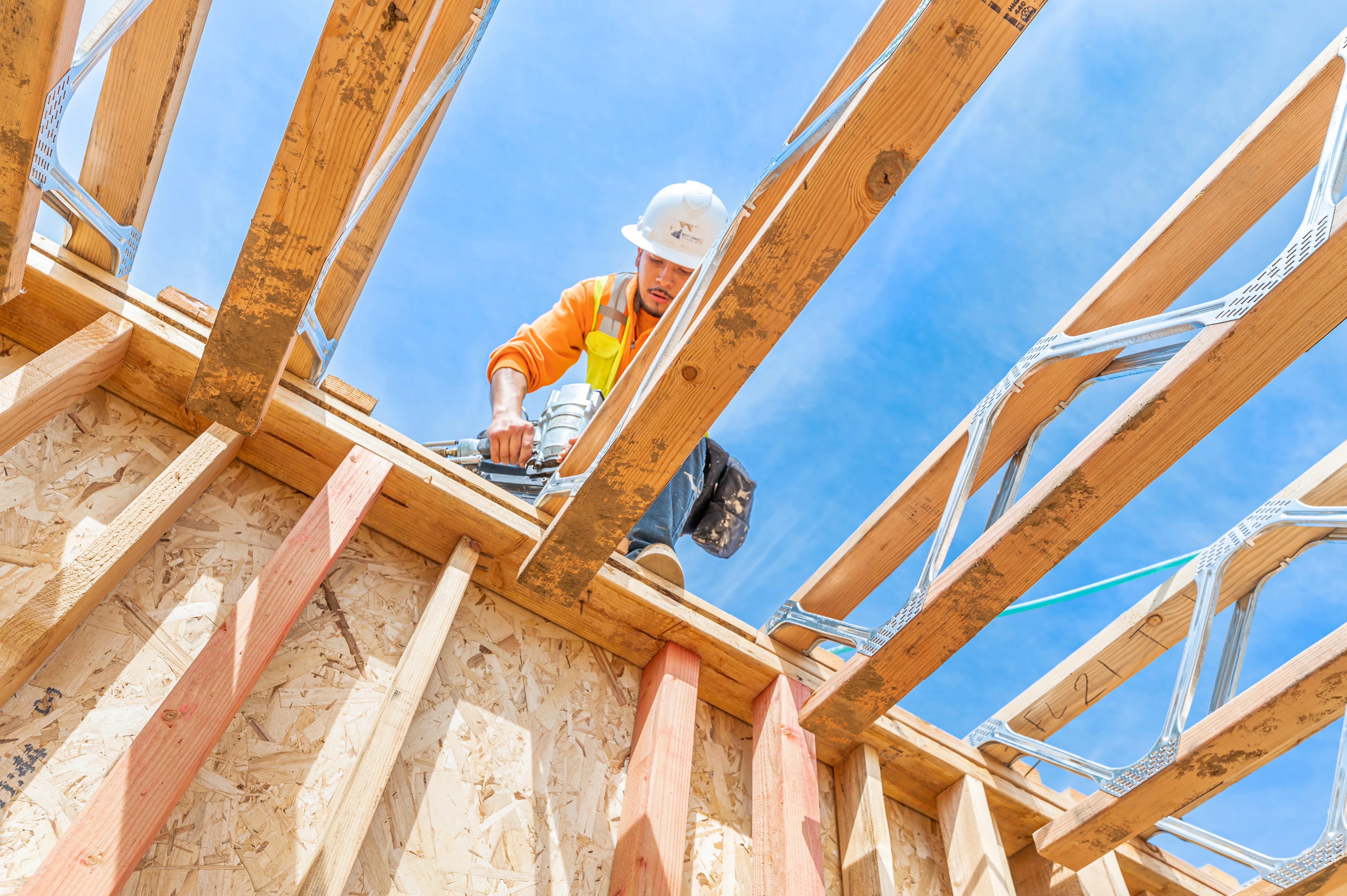
  • Easier Installation: Trusses are manufactured offsite to the exact dimensions needed, which means no onsite cutting, thus making the job much safer for the framer. Other features, like top-chord bearings, can simplify and speed up installation.
  • Faster MEP Work: Utility trades can complete their work in a fraction of the time given the accessibility they have with the open web designs. Electricians and plumbers have significantly less need to drill or cut openings for their material to pass through. 
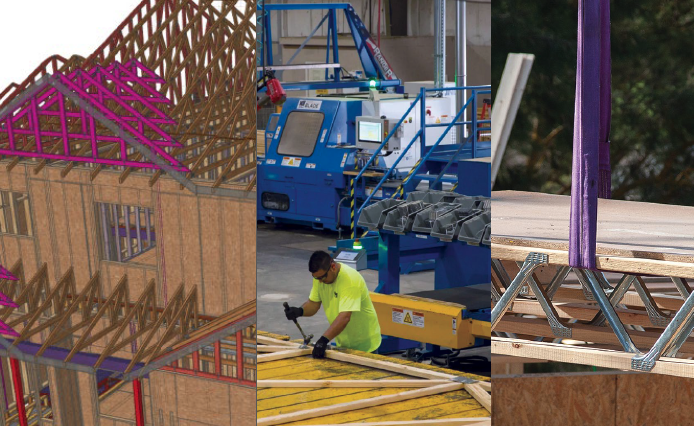
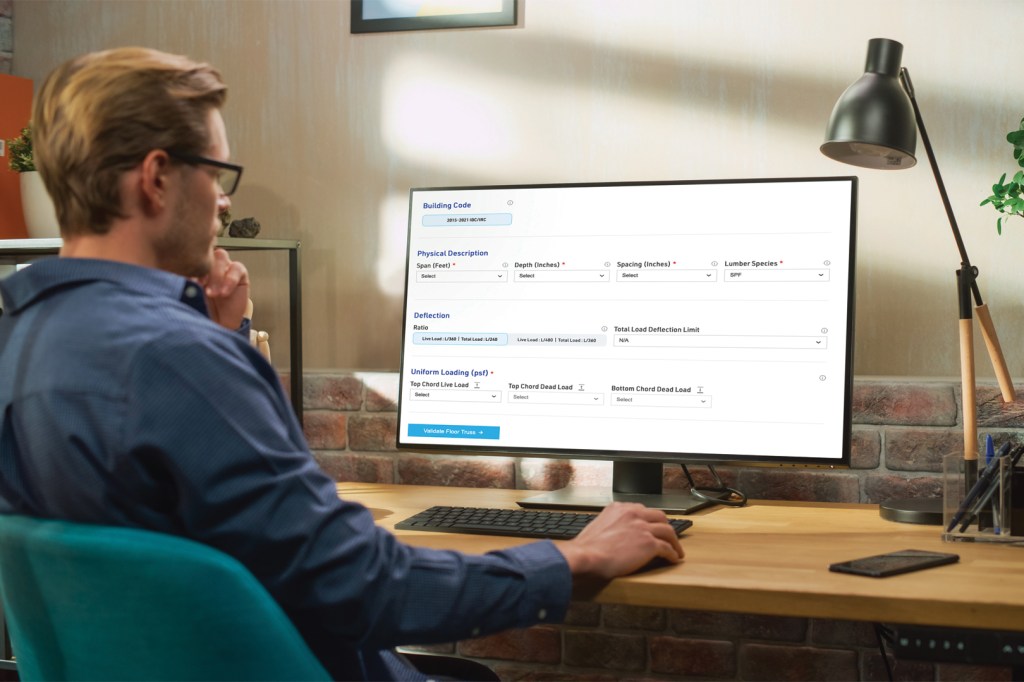
  • Material Reduction: By optimizing the truss design with advanced software, material can be reduced or eliminated, reducing the overall framing time.

Most floor trusses are designed to 16”, 19.2”, or 24” on-center (o.c.) spacing. Each truss is engineered for its specified spacing—a truss designed for 24” o.c. is built stronger to handle the larger load area compared to one designed for 16” o.c. spacing.

There is not a general rule of thumb on the price difference for floor trusses and other floor systems given each of their wide variety of offerings. Additionally, a direct “per-foot” comparison can be misleading, as the true value of trusses comes from a whole-system approach. While there may be a difference in material cost, project savings are often realized through reduced labor for installation and MEP trades, and a reduction in the total amount of framing material needed. For specific project comparisons, it is best to consult your local truss manufacturer for a quote.

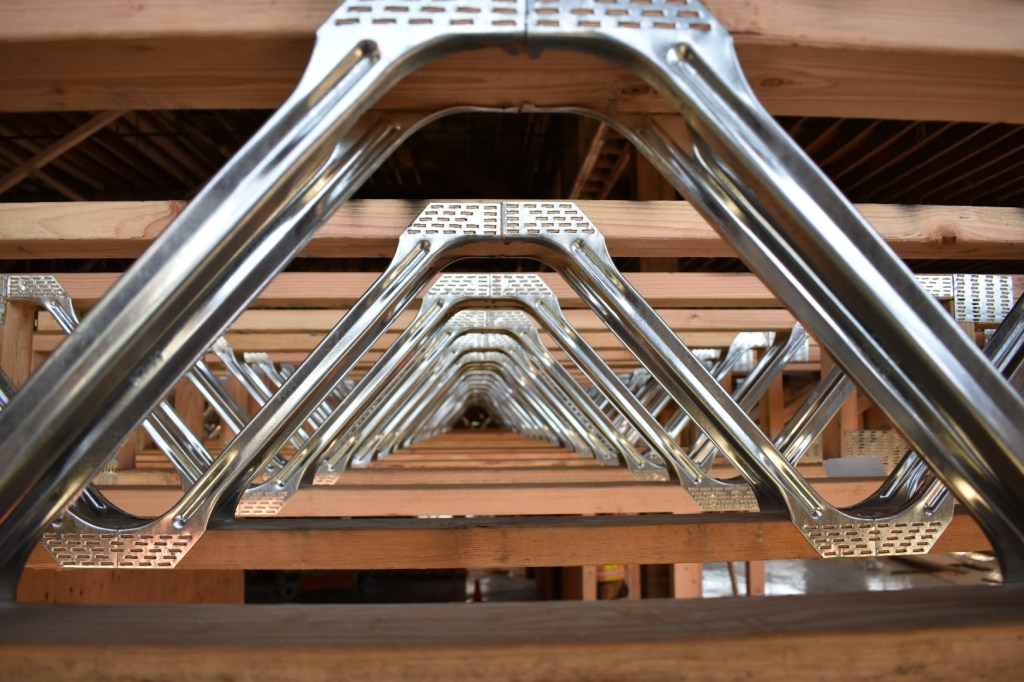
Yes. If you are looking for a lightweight solution that still provides the benefits of an open web design, consider MiTek Posi-Strut® metal web floor trusses. They are a cost-effective choice for the shallow-depth market and are often more economical than i-joists or sawn lumber. 

Webinar Feature: Myths vs. Facts

In this recorded webinar, Joseph Murphy, Senior Director of Business Development, and Stephen Keller, Director of Design Engagement at MiTek, discuss common misconceptions that can hinder builders from using Open Web Floor Trusses. 

Watch to see how they address concerns and feedback they’ve received related to costs, safety, and more.

Joe Murphy
Sr. Director, Homebuilding Consulting & Education

Stephen Keller, P.E.
Director, Design Engagement

Design floors
for the building
Prioritize
total costs
Collaborative
design

Email our Design Engagement team at designengagement@mii.com for questions or to receive more information.